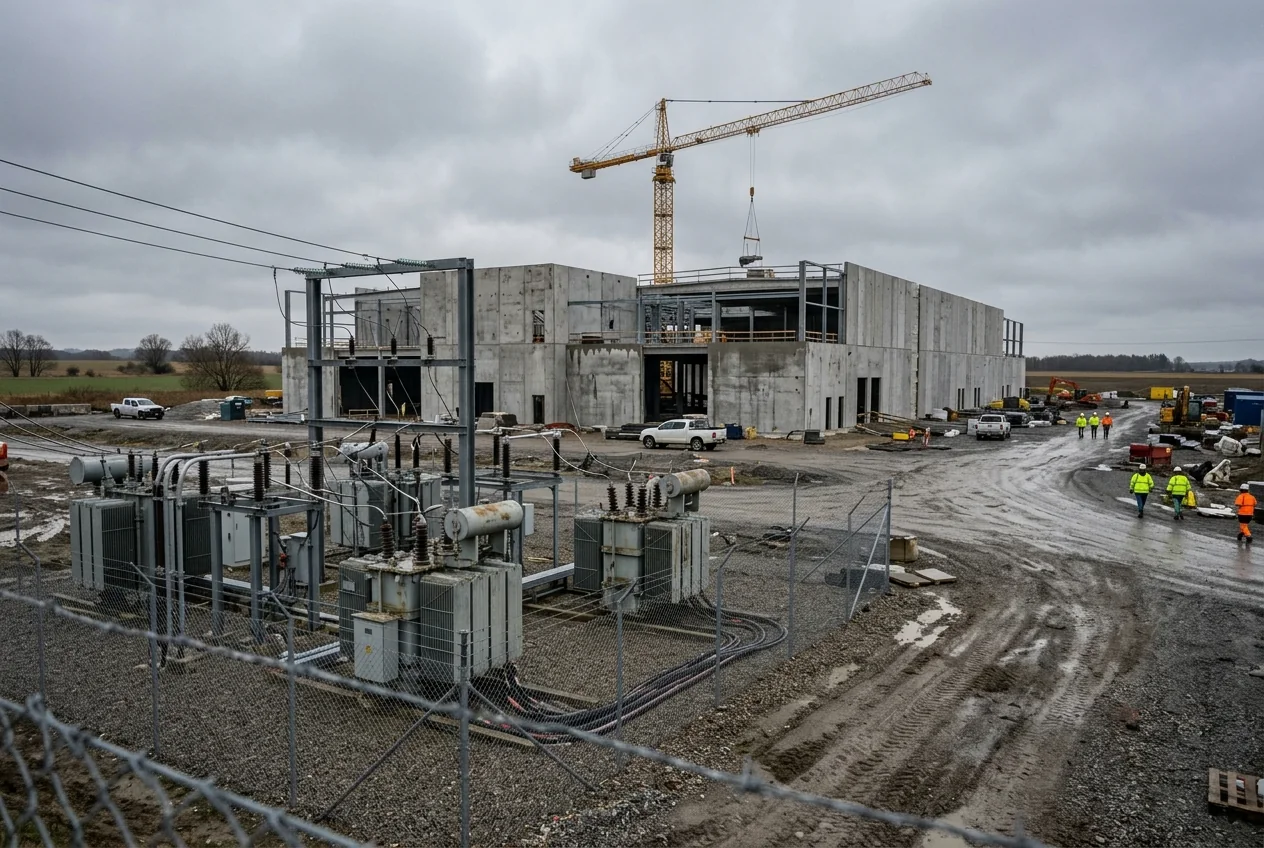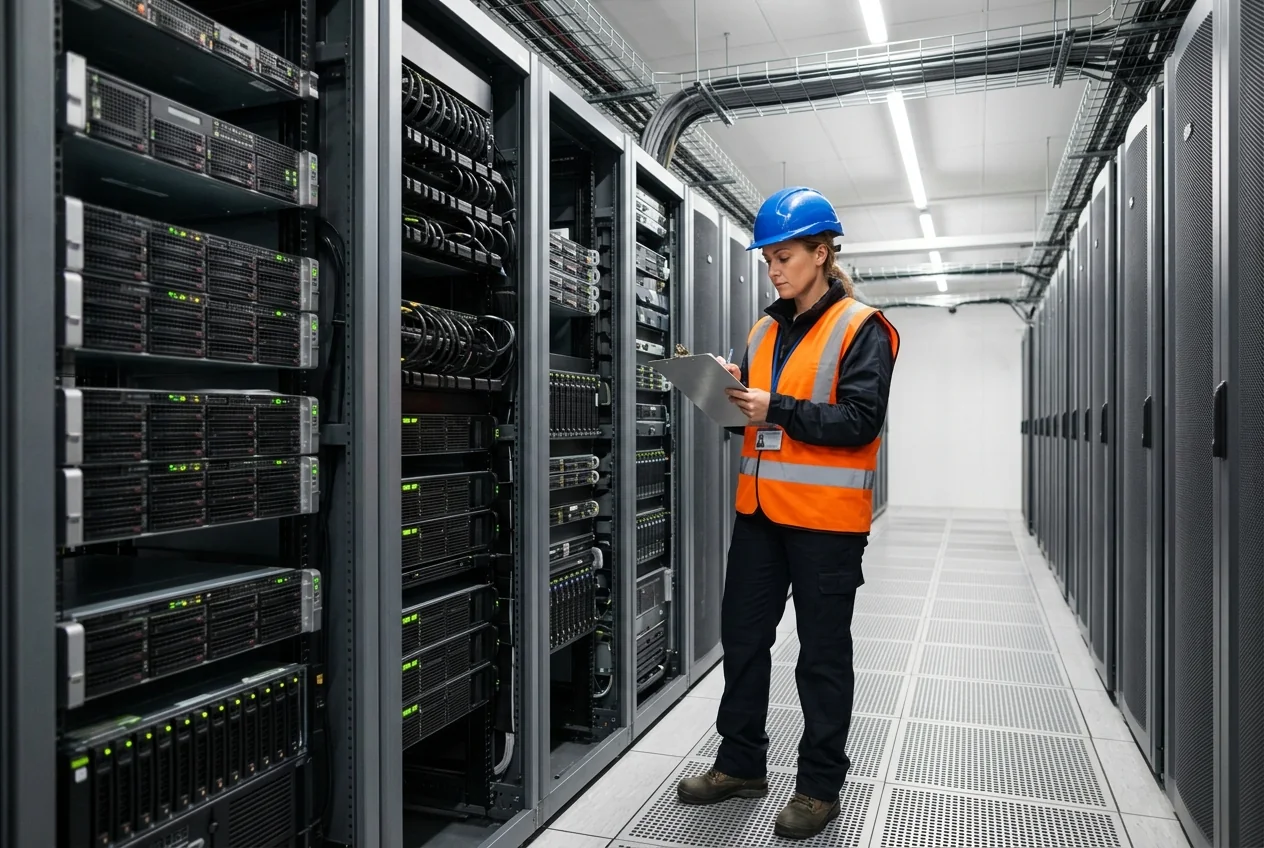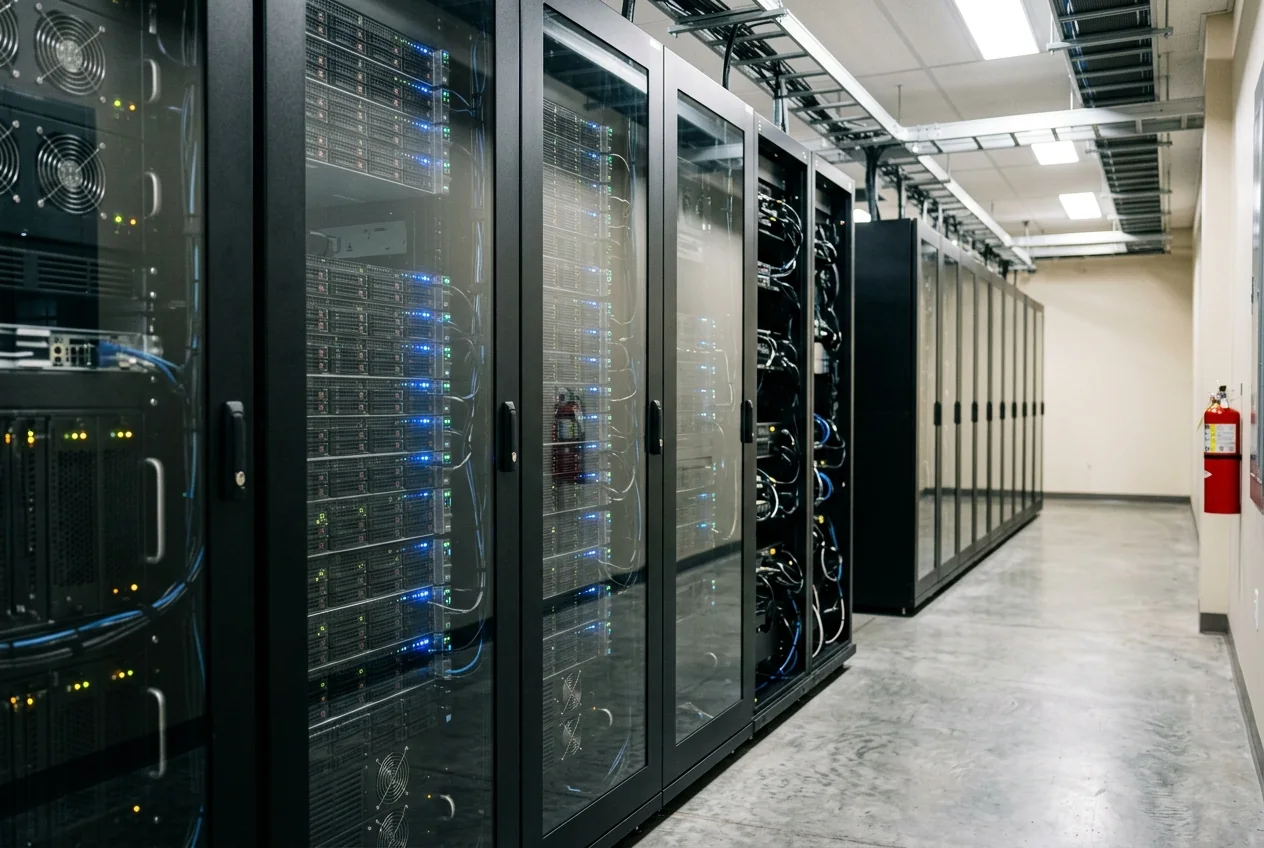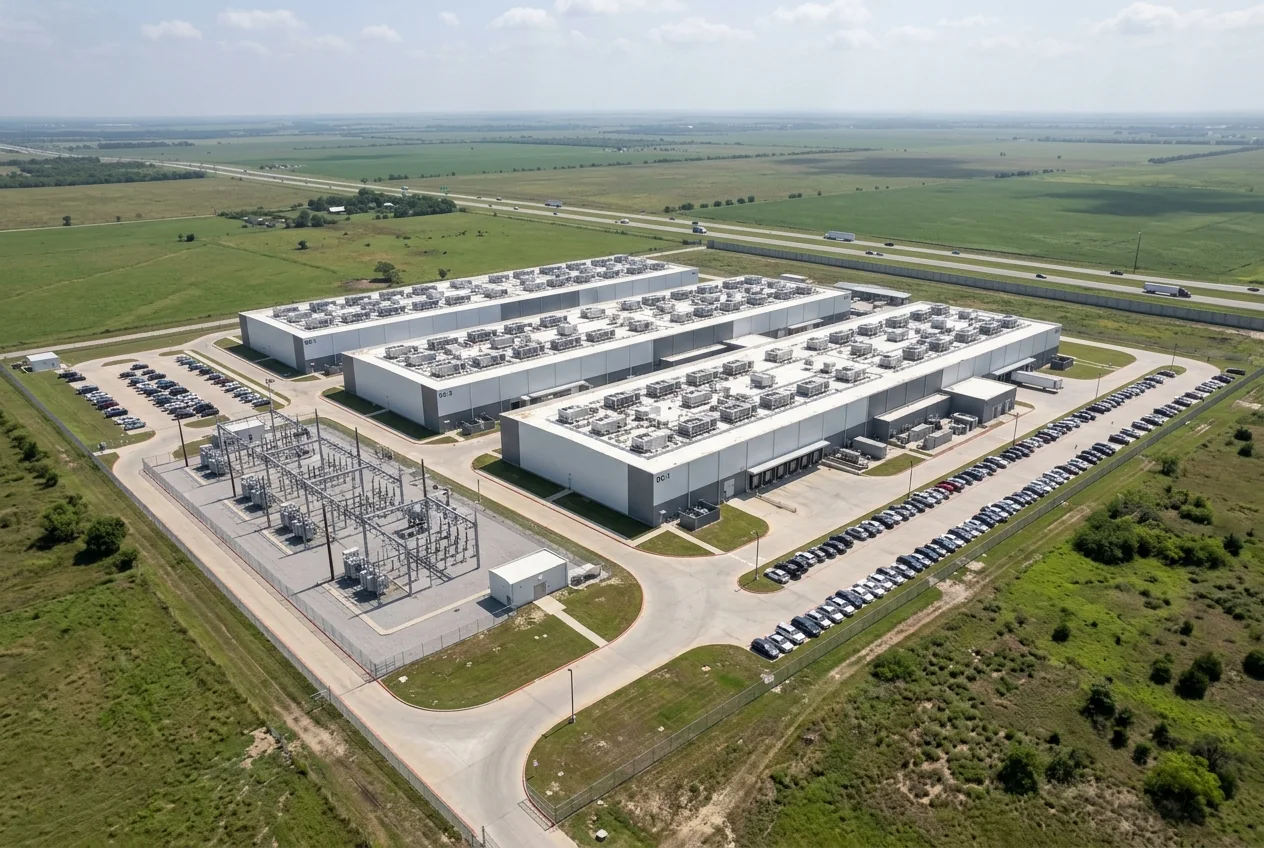
A decentralised buildout grows in stages. An independent cloud brings one customer to a site, then a second, then a refresh of the first, each on its own commitment, while the power, the site works and the operating team are shared by all of them.
The picture most people carry of an AI campus is a single tenant: one hyperscaler or one lab, one building, one long lease. That picture describes the largest deals and almost none of the rest of the market. Independent clouds rarely reach a gigawatt anchor in one step. They grow a campus one customer block at a time, on shared power and shared site works. That changes the commercial picture in ways worth spelling out.
03
Separate commitments, separate credit
Spreading a campus across several customers can spread counterparty risk, although customers in the same market can still be hit by the same events. It also multiplies the number of delivery conditions in play. Each block has its own term, its own start date, its own price, its own acceptance conditions and its own consequences if it slips. Where a tenant's credit is not enough on its own, the enhancement attaches to the lease, not to the campus: Google's backstops at Lake Mariner and Barber Lake stand behind specific Fluidstack leases and their associated debt, not behind the landlord's other tenants24.
The corollary for anyone lending to or insuring the campus is that a strong campus total never fixes one customer's shortfall. A campus that is ninety percent contracted to investment-grade counterparties and ten percent to a startup is two different credits sharing a substation. Each has to be underwritten, delivered and accepted on its own facts.
A strong campus total never fixes one customer's shortfall.
04
How the picture changes for the operator
For the independent cloud, the shared campus is how growth actually happens. The first block is contracted, funded, built, energised and delivered. The second customer docks into the same connection, the same site works and the same operating team, and its block is funded against its own commitment. The connection offer that took years to secure is reused; the transformer that took two years to arrive serves the next block as well as the first7.
The capital picture shifts with it. Instead of one loan sized to one tenant, the campus becomes a set of separate commitments on one physical asset, each of which a lender can consider on its own terms once it is operating8. The operator keeps its cloud and its customers. The customers keep their own contracts. The lenders keep their own collateral.
05
What has to stay separate
Five things, in every block, on every campus. Scope: which racks, which capacity, which performance. Term: when payment starts and when it ends. Delivery requirements: what has to be true for that block to count as delivered, written before it is ordered. Power allocation: that block's share of the authorised limit at that date. And the result: whether what arrived for that customer matched what that customer agreed, independently checked and recorded so that every named organisation can read it and question it.
One build. Several customers. Separate commitments. One programme. CANUS puts each block together with the same partners, keeps each customer's requirements and result separate, and carries what still applies forward as the campus grows.
Sources
- 1
Uptime Institute, Global Data Center Survey 2025, full report (July 2025).
datacenter.uptimeinstitute.com/rs/711-RIA-145/images/2025.Annual.Survey.Report.pdf - 2
TeraWulf, "TeraWulf Signs 200 MW 10-Year AI Hosting Agreements with Fluidstack" (14 August 2025).
investors.terawulf.com/news-events/press-releases/detail/112/terawulf-signs-200-mw-10-year-ai-hosting-agreements-with-fluidstack - 3
TeraWulf, "TeraWulf Announces Fluidstack Expansion with 160 MW CB-5 Lease at Lake Mariner" (18 August 2025).
investors.terawulf.com/news-events/press-releases/detail/114/terawulf-announces-fluidstack-expansion-with-160-mw-cb-5-lease-at-lake-mariner - 4
Cipher Mining, "Cipher Mining Signs 168 MW 10-Year AI Hosting Agreement with Fluidstack" (25 September 2025).
www.globenewswire.com/news-release/2025/09/25/3156107/0/en/Cipher-Mining-Signs-168-MW-10-Year-AI-Hosting-Agreement-with-Fluidstack.html - 5
Reuters, "Dominion Energy beats estimates on strong power demand in Virginia, South Carolina" (31 October 2025).
www.reuters.com/business/energy/dominion-energy-beats-estimates-strong-power-demand-virginia-south-carolina-2025-10-31/ - 6
Oxford Economics Australia for AEMO, Data Centre Energy Consumption report, prepared for the 2025 Inputs, Assumptions and Scenarios Report.
www.aemo.com.au/-/media/files/stakeholder_consultation/consultations/nem-consultations/2024/2025-iasr-scenarios/final-docs/oxford-economics-australia-data-centre-energy-consumption-report.pdf - 7
Wood Mackenzie, "Supply shortages and an inflexible market give rise to high power transformer lead times" (2024).
www.woodmac.com/news/opinion/supply-shortages-and-an-inflexible-market-give-rise-to-high-power-transformer-lead-times/ - 8
Morgan Stanley Research, "Bridging the Data Center Financing Gap" (2025).
www.morganstanley.com/content/dam/msdotcom/en/assets/pdfs/Research_Bridging-Data-Center-Gap.pdf
Public sources, cited as read at the time of writing. CANUS is not affiliated with any company named in these articles, and none of the transactions described involved CANUS.